For builders, developers, and construction professionals working on remote or rural projects in Southwest WA, off-grid solar isn’t a niche proposition anymore, it’s becoming standard practice. Properties without grid access, rural stations, and locations where grid connection costs exceed $30,000–$100,000 now routinely turn to comprehensive off-grid systems as the smarter, more cost-effective alternative.
This guide covers the full picture for professionals advising on off-grid installations in Dunsborough and Busselton: realistic costs, the installation process, WA regulatory requirements, and the specific challenges that matter in this region.
Understanding Off-Grid Solar Systems for Southwest WA
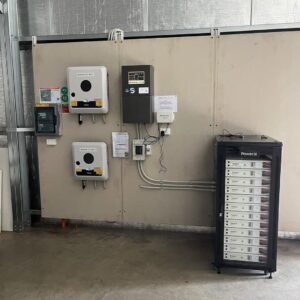
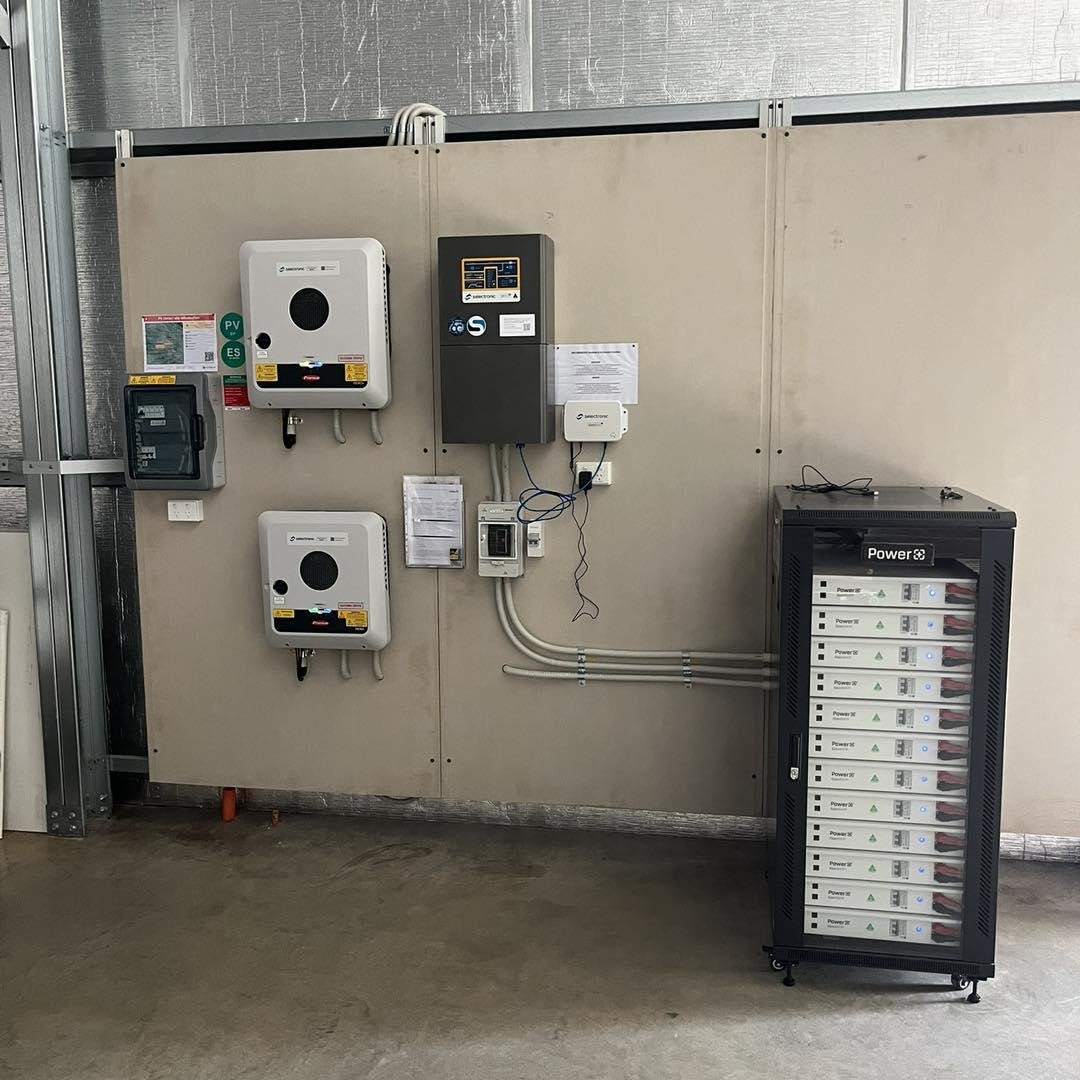
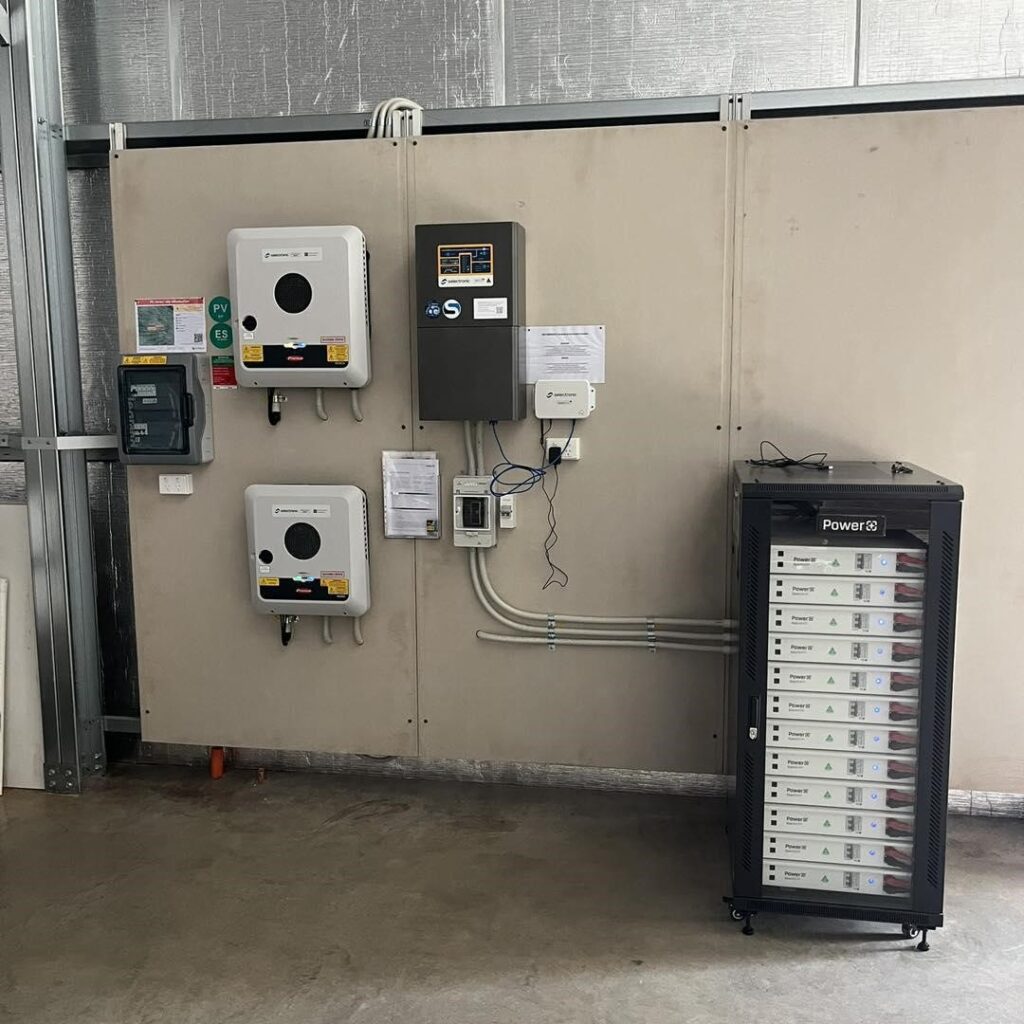
An off-grid solar system is a completely self-contained power setup that operates independently from the electricity grid. Unlike grid-connected solar (which feeds excess power back to the network and draws power when generation is low), an off-grid system must generate and store 100% of the energy needed by the property throughout the year, including cloudy days and winter months when generation drops.
The core components are:
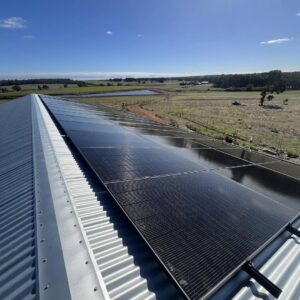
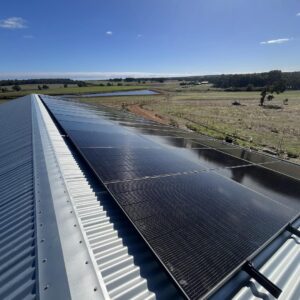
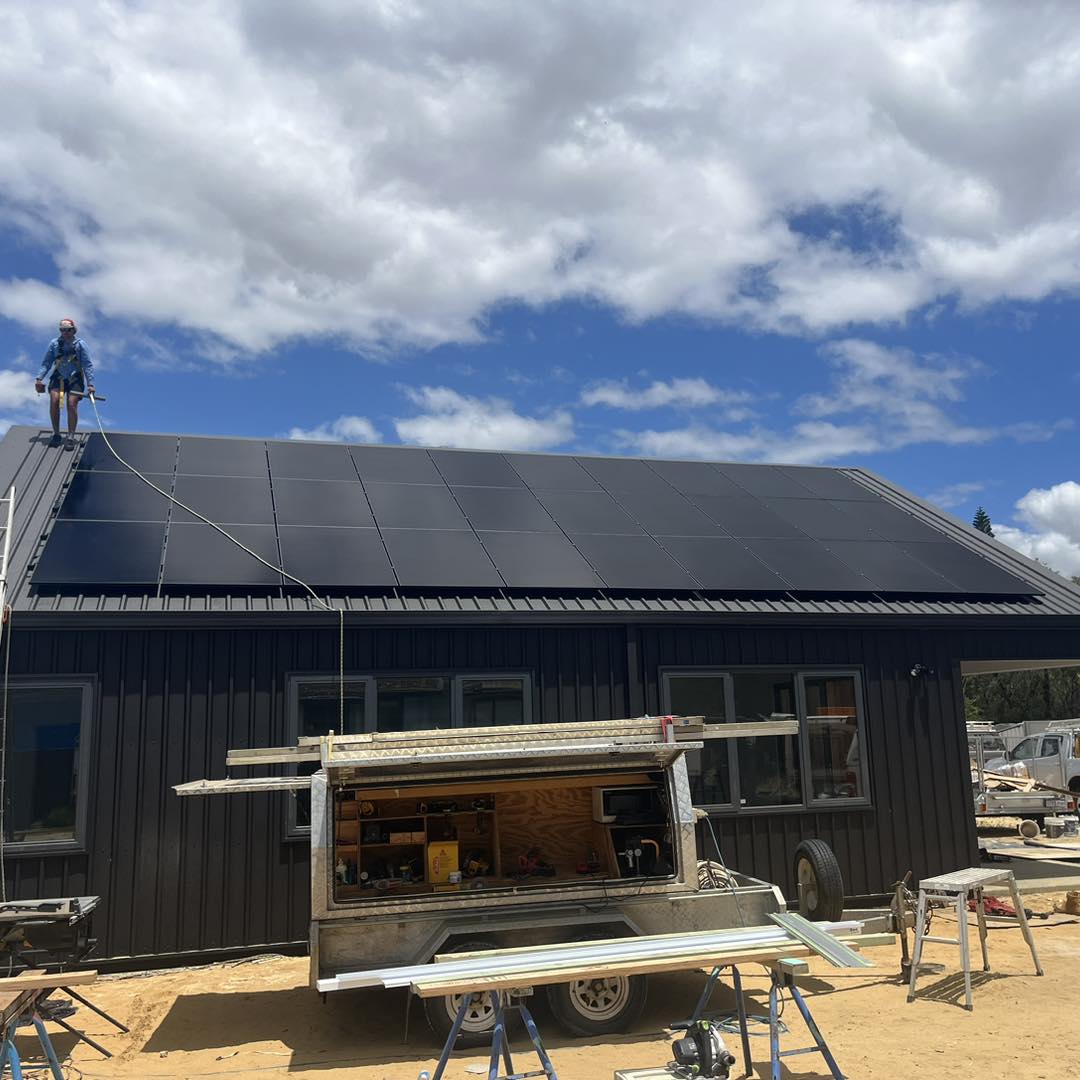
- Solar panels to generate electricity during daylight
- Battery storage (usually lithium) to store excess generation for use at night and during low-sun periods (winter)
- An inverter/charger to convert DC power from batteries into AC power for household appliances
- A backup generator to provide power during extended poor weather or high-demand periods
- Charge controllers to regulate power flow into batteries and prevent overcharging
Dunsborough and Busselton’s Mediterranean climate offers strong solar irradiance, but the coastal location, with salt air exposure and occasional extreme weather, means component selection and installation quality are critical to system longevity.
WA Regulatory Framework for Off-Grid Systems
Off-grid systems in WA are subject to several regulatory layers that must be understood before scoping a project:
Electrical Licensing Requirements
All electrical work on off-grid systems must be completed by a licensed electrical contractor under the WA Electricity (Licensing) Regulations 1991. An unlicensed installer cannot legally perform off-grid electrical work in WA, regardless of cost or schedule pressures.
Once commissioned, the licensed electrical contractor must submit a Notice of Completion to Western Power (or Horizon Power in applicable areas) and provide the client with an Electrical Safety Certificate.
Design and Installation Standards
Off-grid system designs must comply with:
- 1. WA Electrical Requirements (WAER) — mandatory since 1 February 2024
- 2. AS/NZS 4509 (Renewable energy systems — Off-grid power systems) and AS/NZS 3000 (the main electrical safety standard for Australia)
- 3. AS/NZS 5139:2019 for battery installation, which specifies location restrictions, clearances from windows and doors, protective barriers, and maintenance access requirements
Battery Storage Regulations
Battery systems are now subject to strict installation standards. Battery placement is restricted:
- 1. Not in habitable rooms (bathrooms, laundries, kitchens)
- 2. Not in ceiling spaces or wall cavities
- Must be at least 600mm from windows and 900mm from windows/doors above
- 3. If wall-mounted beside a habitable room, the wall must have a non-combustible barrier (cement sheet, brick, or concrete)
- In a garage or external shed only for certain lithium and high-energy batteries
- 4. Must have adequate clearance for maintenance access
For Category 3 batteries (lead-acid or non-approved lithium), installation requirements are more extensive and professional installation is strongly recommended.
Building Permits and Coastal Specifications
Off-grid installations in Dunsborough and Busselton (within 5km of the coast) require marine-grade mounting hardware and frame protection due to salt corrosion risk. Building permits are required for all installations. Wind loading assessments are also mandatory for coastal properties to ensure systems can withstand local weather conditions.
May 2026 Changes — Note for Future Upgrades
From 1 May 2026, new connection requirements apply to grid-connected systems in WA. Off-grid systems are not directly affected, but if a client later decides to grid-connect a property or add export capability, these rules will apply. This is worth mentioning at the design stage for properties that might transition to grid connection later.
The Off-Grid Installation Process: Step-by-Step
Initial Consultation and Load Analysis
The process starts with understanding the client’s actual energy consumption. This involves:
- 1. Reviewing historical power bills (if the property is currently grid-connected) or interviewing the client about typical usage patterns
- 2. Mapping peak demand times (e.g., cooking, heating, cooling, hot water)
- Identifying seasonal variations (heating needs in winter, air conditioning in summer)
- 3. Assessing future loads (EV charging, home office equipment, expanded family use)
Professional installers use this data to size the solar array and battery capacity. Undersizing is the most common error, systems that work fine on average days fail during cloudy periods or high-demand weeks, forcing reliance on the backup generator or, worse, energy shortages.
Site Assessment and Shading Analysis
Site assessment is critical and should never be skipped. It includes:
- 1. Roof or ground analysis: Orientation, tilt angle, available space, structural capacity, age and condition (particularly important for coastal properties where salt exposure may have weakened structures)
- 2. Shading analysis: Using solar pathfinder tools to map shadows from trees, neighbouring buildings, and other obstructions throughout the year. Even 20% shading during peak generation hours can significantly reduce system output.
- 3. Wind and weather exposure: In Dunsborough and Busselton, coastal winds require wind loading calculations and reinforced mounting systems
- 4. Access for maintenance: Identifying safe, practical routes for cleaning panels and servicing equipment
For coastal properties, note any mature trees (jarrah, marri, peppermint) that may grow and cast longer shadows over time, and proximity to salt spray zones (within 1–2km of the ocean is considered high-risk for corrosion).
System Design and Component Selection
Based on the load analysis and site assessment, the installer designs a system with:
- 1. Solar array size: Typically 1.5 to 2 times the average daily load (because winter generation is lower and clouds reduce output). A home using 20 kWh/day might need a 10–15 kW array to reliably generate 20 kWh even in winter.
- 2. Battery capacity: Generally sized for 3–5 days of autonomy (i.e., enough storage to cover 3–5 days of cloudy weather without the generator running). For a 20 kWh/day home, that’s 60–100 kWh of battery storage.
- 3. Inverter and charge controller capacity: Sized to handle peak loads and charge rates. An undersized inverter will limit what appliances can run simultaneously; an undersized charge controller will waste solar generation on cloudy days.
- 4. Backup generator: Sized to handle household peak demand or to recharge batteries during extended poor weather. A 10–15 kW generator is typical for residential systems.
Component Quality and Coastal Durability
For Dunsborough and Busselton:
- 1. Mounting hardware: Must be stainless steel or hot-dip galvanised; standard aluminium frames corrode rapidly in salt air
- 2. Panel frames: Enhanced coating or marine-grade specifications
- 3. Battery enclosures: Sealed or vented to prevent salt spray ingress
- 4. Electrical connections: Corrosion-resistant terminals and protective coatings
- 5. Inverter and controller placement: Protected from direct salt spray exposure; may require a weatherproof enclosure
Lithium batteries perform better than lead-acid in WA’s climate (better temperature tolerance, longer cycle life, lower maintenance), but they are also more expensive upfront. Lead-acid batteries require regular maintenance (water top-ups, terminal cleaning) and are more sensitive to temperature swings.
Permits, Approvals, and Safety Certification
Before installation begins:
- 1. Local council building permits must be obtained (typically 2–4 weeks)
- 2. Coastal building code compliance must be confirmed (wind loading, materials, setbacks from property boundaries)
- 3. Western Power or Horizon Power notification may be required (particularly if the property was previously grid-connected)
- 4. After installation, the licensed electrical contractor must submit a Notice of Completion and provide an Electrical Safety Certificate
This is non-negotiable and delays caused by permit backlogs should be factored into project schedules.
Cost Breakdown for Off-Grid Systems in Southwest WA
Off-grid system costs vary widely based on system size, battery technology, and site complexity. Here’s realistic pricing based on current market data:
| System Size | Daily Load | Battery Capacity | Equipment Cost | Installation Cost | Total Investment |
|---|---|---|---|---|---|
| Small (5kW) | 15–20 kWh | 20–30 kWh | $15,000–$25,000 | $3,000–$5,000 | $18,000–$30,000 |
| Medium (8kW) | 25–35 kWh | 40–50 kWh | $25,000–$40,000 | $5,000–$8,000 | $30,000–$48,000 |
| Large (12kW) | 40–60 kWh | 60–80 kWh | $40,000–$65,000 | $8,000–$12,000 | $48,000–$77,000 |
| Very Large (15kW) | 60–80 kWh | 80–120 kWh | $60,000–$100,000 | $12,000–$18,000 | $72,000–$118,000 |
Additional costs to factor in:
- 1. Site preparation: Trenching for cable runs, foundation work for ground-mounted arrays, roof reinforcement if needed (add $1,000–$5,000)
- 2. Backup generator setup: Fuel storage, transfer switch, weatherproof enclosure (add $2,000–$5,000)
- 3. Coastal upgrades: Marine-grade hardware, enhanced coatings, salt spray protection (add 10–15% to component costs)
- 4. Annual maintenance contracts: Battery checks, panel cleaning, generator servicing ($500–$1,200/year)
Why Lithium Costs More
Lithium battery systems are 30–50% more expensive than lead-acid upfront but deliver better value over the system lifetime:
- 1. Lithium cycle life: 10,000–20,000 cycles (10–15 years typical use)
- Lead-acid cycle life: 3,000–5,000 cycles (3–7 years)
- 2. Lithium requires minimal maintenance; lead-acid requires regular water top-ups and terminal cleaning
- 3. Temperature tolerance: Lithium performs better in WA’s summer heat and winter cold
Site Challenges Specific to Dunsborough and Busselton
Salt Air Corrosion
The coastal location is the biggest durability challenge. Salt-laden air corrodes:
- 1. Mounting hardware and panel frames (leading to structural failure)
- 2. Electrical connections (causing arcing and safety hazards)
- 3. Battery enclosures (allowing moisture and corrosion inside)
- 4. Generator fuel systems (contamination and clogging)
Mitigation strategies
- 1. Specify marine-grade stainless steel or hot-dip galvanised hardware throughout
- 2. Use corrosion-inhibiting coatings on all exposed metal
- 3. Install battery systems in sealed, weatherproof enclosures with drainage
- 4. Establish a 6–12 month cleaning schedule to remove salt spray buildup
- 5. Consider an annual professional inspection specifically for corrosion
Wind Loading and Severe Weather
Dunsborough and Busselton can experience strong coastal winds and occasional severe storms. Arrays must be:
- 1. Designed and installed to meet wind loading calculations for the specific location
- 2. Mounted with reinforced racking using heavy-duty fasteners
- 3. Positioned to minimise wind resistance without compromising solar exposure
- 4. Regularly inspected after severe weather events
Sandy Soils and Drainage
Southwest WA’s sandy soils present challenges for ground-mounted systems:
- 1. Ground arrays require deep foundations or ballasted mounting to prevent shifting
- 2. Drainage design is critical to prevent water pooling around battery enclosures
- 3. Cable trenches must be laid at proper depth and slope to avoid water accumulation
Native Vegetation and Seasonal Shading
Mature jarrah, marri, and peppermint trees are common in the region. Trees that appear to cast minimal shade in summer can significantly shadow the array in winter (when the sun is lower). Professional shading analysis with software tools is essential to avoid retrofitting or relocating panels later.
Battery System Sizing and Configuration
The most critical design decision is battery capacity. Here’s how to think about it:
Autonomy Days Approach
For off-grid systems, autonomy refers to how many days the battery can power the home without solar generation. In Southwest WA:
- 1. 3-day autonomy: Suitable for most locations with reliable winter solar. Covers typical cloudy periods without running the generator frequently.
- 2. 5-day autonomy: Recommended for areas with unreliable winter generation or high winter loads (heating, hot water).
- 3. 7+ day autonomy: Only necessary for extremely remote locations or properties with very high winter consumption.
Example: A home using 30 kWh/day with 4-day autonomy needs 120 kWh of battery storage. With depth-of-discharge (DoD) limits (typically 80–90% for lithium, 50% for lead-acid), the usable capacity required is higher:
- 1. Lithium (80% DoD): 120 kWh ÷ 0.8 = 150 kWh nominal capacity
- 2. Lead-acid (50% DoD): 120 kWh ÷ 0.5 = 240 kWh nominal capacity
This demonstrates why lithium is more cost-effective despite higher upfront cost.
Seasonal Sizing
Winter generation in Southwest WA is roughly 40–50% of summer generation. A system sized only for average annual demand will run out of power in winter. Proper sizing accounts for worst-case winter conditions.
Common Installation Mistakes to Avoid
Undersizing the System
This is the most frequent error. Homeowners often size systems based on average consumption, ignoring seasonal variation and cloudy periods. Result: frequent generator use, depleted batteries, and unhappy clients. Always include at least 20% safety margin and design for winter generation capacity.
Poor Component Matching
Mixing incompatible inverters, charge controllers, and batteries leads to reduced efficiency, communication failures, and premature component failure. All components must be certified to work together, and the installer must verify compatibility during design.
Inadequate Backup Power Planning
A generator that’s too small won’t recharge batteries efficiently during extended cloudy periods. A generator that’s too large is inefficient and expensive. Sizing should be based on peak household demand plus a 20% margin.
Neglecting Coastal Specifications
Using standard (non-marine-grade) hardware in Dunsborough or Busselton will result in rapid corrosion and system failure within 3–5 years. This is not optional; it’s a baseline requirement.
Poor Shading Analysis
Installing panels in locations with seasonal shading (even 10–20%) reduces annual output significantly. Proper shading analysis with software tools must be done before installation, not discovered after commissioning.
Insufficient Maintenance Access
Panels need cleaning, batteries need inspection, and generators need servicing. If the installation doesn’t allow safe access, maintenance becomes expensive, dangerous, or skipped, all of which reduce system performance.
Maintenance Requirements and Ongoing Costs
Off-grid systems require more active management than grid-connected systems:
Annual Maintenance Tasks:
- 1. Battery health check (voltage, temperature, charge/discharge efficiency)
- 2. Panel cleaning (particularly important in coastal areas where salt spray accumulates)
- 3. Inverter/controller inspection and software updates
- 4. Generator servicing (oil change, fuel filter, load test every 12 months)
- 5. Cable and connection inspection (looking for corrosion, loose terminals)
- 6. Safety inspection (particularly for battery enclosures and electrical connections)
Typical Annual Cost: $500–$1,200 depending on system size and location
Battery Replacement: Lithium batteries typically need replacement after 10–15 years; lead-acid after 3–7 years. Budget accordingly in the client’s long-term planning.
Professional Monitoring Services: Many installers now offer remote monitoring that alerts to performance issues before they cause problems. This can cost $100–$300/year but often prevents expensive emergency repairs.
Working with a Qualified Off-Grid Installer in Southwest WA
Installer selection is critical in WA’s regulatory environment. Key criteria:
- 1. Licensed electrical contractor status: Non-negotiable. Confirm current licence under the WA Electricity (Licensing) Regulations 1991.
- 2. SAA (Solar Accreditation Australia) accreditation: Required to claim Small-scale Technology Certificates (STCs) if applicable and to demonstrate current knowledge of WA standards.
- 3. Off-grid system experience: Not all solar installers have off-grid expertise. Ask for references from previous off-grid installations in similar conditions.
- 4. Coastal property experience: If working in Dunsborough or Busselton, ask about previous projects in salt-air environments and corrosion mitigation strategies.
- 5. Warranty coverage: Reputable installers offer 10-year workmanship warranties on installation and system design.
- 6. Post-installation support: Monitoring setup, maintenance scheduling, and emergency support are all part of professional service.
MaxSolar’s Approach
MaxSolar, based in Vasse, specialises in Southwest WA off-grid and grid-connected installations. As a licensed electrical contractor with 15+ years of regional experience, they handle all regulatory paperwork, perform detailed site assessments, and provide fixed-price quotes with no hidden costs. Their team provides three system options tailored to the client’s usage and budget, and they manage Western Power approvals and council permits as part of the standard installation process.
Client Feedback:
“MaxSolar was the only company that provided us with options for our consideration and Matt thoroughly explained each option.” — Ben Murphy, Busselton
“Matt was so efficient, punctual, polite, professional & discussed every necessary decision with us.” — Greg & Lynne Mather, Busselton
“Unlike some other places we looked at for quotes, he was so quick to respond, kept up excellent communication, even post-installation.” — Emma Hardy
Incentives and Support
Small-scale Technology Certificates (STCs)
Off-grid systems with renewable generation (solar, wind, micro-hydro) may be eligible for STCs under the federal Small-scale Renewable Energy Scheme. This reduces upfront costs significantly. The installer must be SAA-accredited to claim STCs on the client’s behalf.
Battery Rebates
Off-grid batteries more than 1km from the grid and installed on a dwelling may qualify for STCs if they meet CEC approval requirements. The WA Residential Battery Scheme also offers rebates (up to $5,000 for eligible systems).
Note: These rebates apply mainly to on-grid or hybrid systems; fully off-grid systems may have limited eligibility. Check with your installer about specific qualifications.
Investing in Off-Grid Solar: Long-Term Value
For properties in Dunsborough, Busselton, or other Southwest WA locations without grid access, off-grid solar delivers:
- Immediate cost avoidance: Eliminating $30,000–$100,000+ grid connection fees
- Long-term energy security: No reliance on grid reliability or rising electricity prices
- Environmental benefits: Clean, renewable energy generation and reduced diesel consumption
- Resale value: Energy-independent properties command premium prices in rural markets
- Predictable operating costs: No surprises from tariff increases; generator fuel is the only variable cost
Payback periods typically range from 8–15 years, after which the system generates essentially free energy for another 15–20 years.
Frequently Asked Questions
What size off-grid system do I need for a typical Busselton home?
A three-bedroom home using 25–35 kWh/day needs an 8–12 kW solar array and 40–60 kWh of battery storage. This assumes 4 days of autonomy and winter generation capacity. Professional load analysis is essential, undersizing is the most common error.
How long does off-grid installation take?
Site assessment to commissioning typically takes 6–10 weeks, including design, permitting (2–4 weeks), equipment procurement, and installation (3–7 days on-site). Permit delays are the biggest variable; factor this into project schedules.
Can I retrofit an off-grid system to an existing home?
Yes, but existing structures (roof condition, electrical switchboard, cable routes) often require upgrades. Budget for roof reinforcement, trenching, and switchboard work. Modern homes designed with solar in mind are cheaper to retrofit.
What maintenance does an off-grid system require?
Annual checks of battery health, panel cleaning, inverter/controller inspection, generator servicing, and electrical safety checks. Coastal properties need additional salt spray cleaning. Professional annual maintenance costs $500–$1,200.
How do off-grid systems perform during Dunsborough/Busselton's winter?
Winter solar generation is 40–50% of summer levels. Well-designed systems account for this through larger arrays and sufficient battery capacity. The backup generator provides additional security during extended cloudy periods (rare but possible).
Can air conditioning run on an off-grid system?
Yes, but it significantly increases power requirements and system costs. Efficient units and smart load management help. Battery capacity must account for nighttime cooling if needed. During peak summer afternoon peaks, the system typically runs on solar + battery, minimising generator use.
What permits and approvals are required?
Building permits from the local council, electrical safety certification, Notice of Completion to Western Power/Horizon Power, and wind loading assessments for coastal properties. Coastal installations also require marine-grade specification verification. The licensed installer handles most paperwork.
Why is coastal location a challenge?
Salt air corrodes unmarine-grade hardware, panel frames, and electrical connections, leading to structural and electrical failures within 3–5 years. Marine-grade components and regular maintenance are essential. This adds 10–15% to equipment costs but is mandatory for system longevity.
What's the difference between lithium and lead-acid batteries?
Lithium: 10–15 year lifespan, minimal maintenance, better temperature tolerance, higher upfront cost. Lead-acid: 3–7 year lifespan, requires regular water top-ups and terminal cleaning, more temperature-sensitive, lower upfront cost. For most applications, lithium offers better long-term value.
How do I choose between generators?
Generator size should match peak household demand plus 20% margin. Fuel type (diesel, petrol, LPG) depends on availability and storage. Diesel is most common for larger systems due to fuel efficiency. The installer should calculate required generator size during design.