If you’re a builder, developer, or construction professional working in Southwest Western Australia, solar is increasingly part of the brief, not just a client afterthought. From new residential builds in Busselton to commercial developments in Margaret River, getting the solar specification right from the start saves time, avoids costly re-work, and gives your clients a system that actually delivers.
This guide covers the factors that determine solar panel performance in Southwest WA: orientation, climate, local regulatory requirements, and what to look for in a qualified installation partner. Whether you’re advising clients or including solar in a development specification, these are the details that matter in this region.
Understanding Southwest WA’s Solar Resource
Southwest WA consistently ranks among Australia’s strongest solar regions. The Mediterranean climate brings dry summers, mild winters, and excellent solar irradiance throughout the year, conditions that make a well-designed system perform exceptionally well over its lifespan.
According to Bureau of Meteorology solar exposure data, the Perth and Southwest region receives some of the highest average daily solar exposure in Australia. During summer, expect up to 8–9 hours of useful solar generation per day; in winter, that drops to around 3.5–4.5 hours, still considerably better than most eastern state locations, which deal with greater cloud cover. The region’s consistent clear skies during shoulder seasons help maintain strong year-round output, which is why Southwest WA solar systems tend to outperform equivalent systems installed elsewhere in Australia.
For new builds, that’s a compelling performance baseline to work with.
WA Regulatory Framework: What Builders and Developers Need to Know
Solar installation in WA sits across several layers of legislation and technical requirements. This is the area most often underestimated in project planning, and where the wrong installer can create real compliance risk.
Under the WA Electricity (Licensing) Regulations 1991, only licensed electrical contractors can perform solar electrical work. An unlicensed tradesperson simply cannot legally complete a solar installation in WA, regardless of the project schedule. Once installed, the electrical contractor must submit a Notice of Completion to Western Power (or Horizon Power in applicable areas), and must provide the client with an Electrical Safety Certificate.
All new electrical installation designs in WA must comply with the updated WA Electrical Requirements (WAER), mandatory since 1 February 2024. These align with AS/NZS 4777.2 and the WA Service and Installation Requirements (WASIR).
From 1 May 2026, updated connection rules apply to all new and upgraded solar and battery systems on the South West Interconnected System (SWIS). These introduce CSIP-AUS commissioning requirements for Synergy customers and allow systems up to 30 kVA under a standard connection. If you’re planning developments scheduled past this date, confirm your installer is across the changes.
For commercial buildings and multi-dwelling developments, building permits are required for all solar installations in WA. Residential single homes are generally exempt, except in cyclonic wind regions C or D.
MaxSolar handles all regulatory applications, including Synergy DEBS registration and Western Power approvals, as part of their standard installation process. That’s one less coordination point on your project.
Optimal Panel Orientation and Tilt Angles
Orientation has a bigger impact on system performance than most people expect. Southwest WA sits at approximately 32 degrees south latitude, which influences both the optimal tilt angle and the trade-offs between different configurations.
North-facing installations
North-facing panels at 30–35° tilt remain the benchmark for maximising total annual energy output. They capture the highest concentration of solar irradiance during the midday peak and are the right call when sheer generation volume is the priority.
East-west split configurations
For clients with morning and evening-heavy consumption patterns, commercial tenants, households running pool pumps, or developments with EV charging, east-west split configurations extend generation across more of the day. They typically deliver 92–98% of north-facing annual output while producing a smoother daily generation curve.
| Orientation | Peak Generation Time | Annual Output | Best Use Case |
|---|---|---|---|
| North-facing (30–35°) | 11am – 2pm | 100% baseline | Maximum annual generation |
| East-facing (30°) | 8am – 12pm | 90–95% | Morning consumption profiles |
| West-facing (30°) | 12pm – 6pm | 90–95% | Peak DEBS export window |
| East-West split | Extended daily curve | 92–98% | Consistent daily generation |
A note on WA’s DEBS export rates: Under the Distributed Energy Buyback Scheme, electricity exported to the grid between 3pm and 9pm earns 10c/kWh, while exports at all other times earn 2c/kWh (Synergy customers, effective 1 July 2025). For clients prioritising export earnings or with west-heavy usage profiles, that peak window makes a west-facing or split configuration worth modelling properly, not just defaulting to north.
Climate Factors Affecting Solar Performance
Temperature and efficiency
Southwest WA’s summer heat does affect output. Solar panels typically lose around 0.3–0.5% efficiency for each degree above 25°C, what’s referred to as the temperature coefficient. The good news for coastal Southwest WA is that afternoon sea breezes moderate panel temperatures compared with inland locations, helping maintain real-world output closer to rated capacity during summer peaks.
Seasonal variation
Winter performance in Southwest WA is notably strong. Clear winter skies mean output typically sits at 70–80% of peak summer levels, significantly better than cloudier eastern state equivalents, where 50–60% is more common. For clients assessing annual payback, this matters.
Dust, debris, and rainfall cleaning
The extended dry summer means panels can lose 5–15% efficiency to accumulated dust and debris. Winter rainfall naturally handles most of this, but during long dry periods, periodic cleaning is worthwhile. For commercial installations or roofs without easy access, it’s worth discussing a solar panel maintenance plan at design stage rather than treating it as an afterthought.
Shading Analysis: Get This Done at Design Stage
For builders, the shading conversation needs to happen before the slab is poured, certainly before landscaping or neighbouring structure positions are locked in. Shading during peak generation hours can reduce system output by 20–50% or more, and adjusting a site plan on paper is significantly cheaper than redesigning a system on a completed build.
Common shading challenges in Southwest WA include:
- Mature jarrah, marri, and peppermint trees that cast longer winter shadows than expected
- Two-storey neighbouring homes on tighter suburban lots
- Pergolas, skylights, and roof penetrations that weren’t factored into the original specification
MaxSolar uses solar pathfinder tools and 3D modelling to map shading patterns across all seasons during site assessment. Including this in the design consultation, rather than at handover, is how you avoid expensive conversations with clients six months after practical completion.
Technology Selection for Southwest WA Conditions
Panel technology
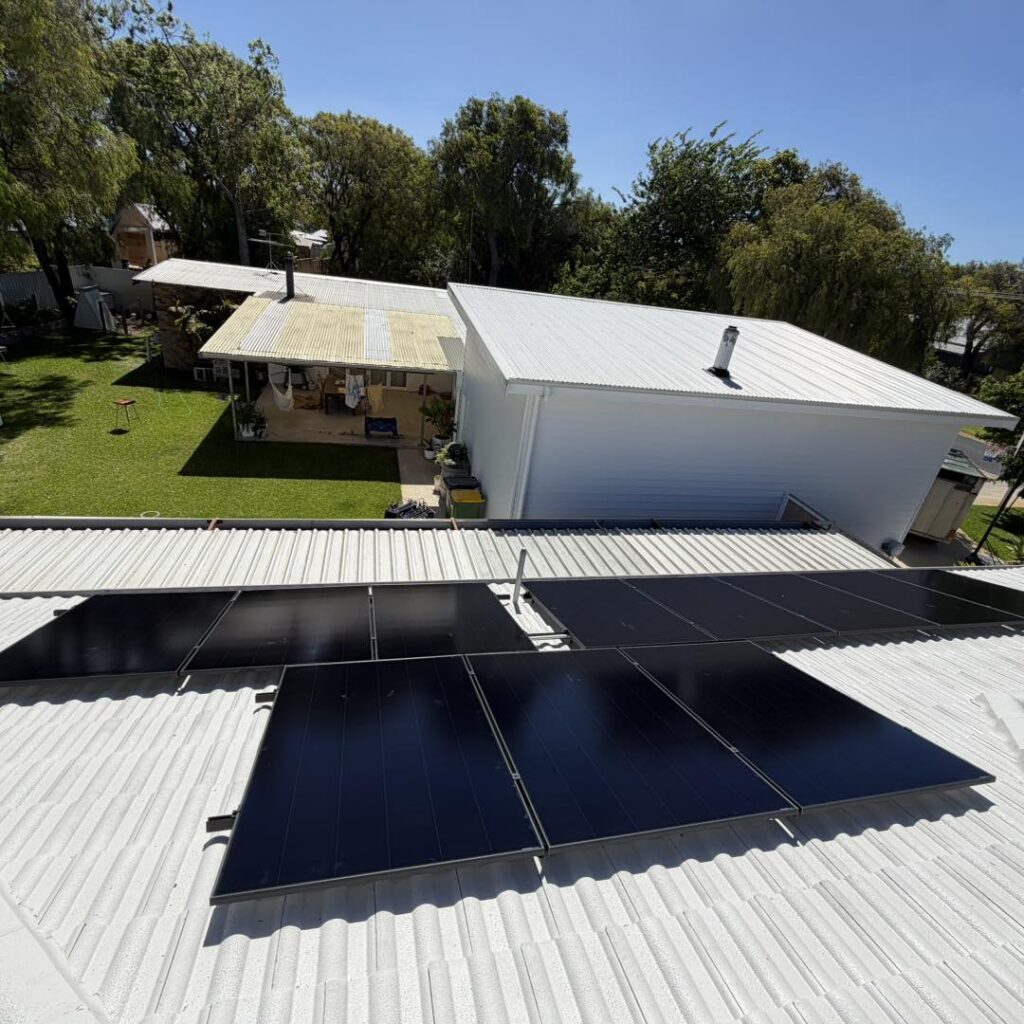
Monocrystalline panels perform well in Southwest WA’s high-irradiance environment, offering better efficiency and improved heat tolerance. For larger commercial installations with generous roof space, polycrystalline panels remain a cost-effective alternative where efficiency per square metre is less of a constraint.
Inverter selection
String inverters suit straightforward north-facing configurations cleanly. For commercial roofs with multiple pitch angles, mixed orientations, or partial shading, common in mixed-use developments, power optimisers or microinverters deliver better overall output. SolarEdge systems with panel-level optimisers are widely used across Southwest WA installs and are regularly specified by MaxSolar clients on more complex projects.
Coastal specifications
Properties within 5km of the coast require marine-grade mounting hardware and panel frames with enhanced corrosion protection. This isn’t a premium upgrade, it’s a baseline specification requirement for coastal sites. Without it, salt air degrades components well before the warranty period ends. For builders working in Dunsborough, Yallingup, Busselton, or Margaret River, factor this into your standard coastal build spec.
Commercial and New Build Considerations
If solar is part of a commercial or multi-residential development, here are the design-stage questions worth resolving early:
- Grid connection capacity: Western Power’s available connection capacity varies by location. Check this before finalising system size, especially for developments with multiple units.
- Switchboard and metering: Commercial installations require adequate switchboard capacity and appropriate metering for grid export. MaxSolar assesses cable runs, switchboard locations, and component space as part of every quote.
- Building permits: Required for all commercial solar installations in WA. Factor approval timelines into your construction programme.
- System sizing: MaxSolar offers systems from 3.9kW to 13.3kW for residential projects, with commercial configurations tailored to specific usage profiles and available roof space. The 6.6kW system is the most popular choice for average family homes.
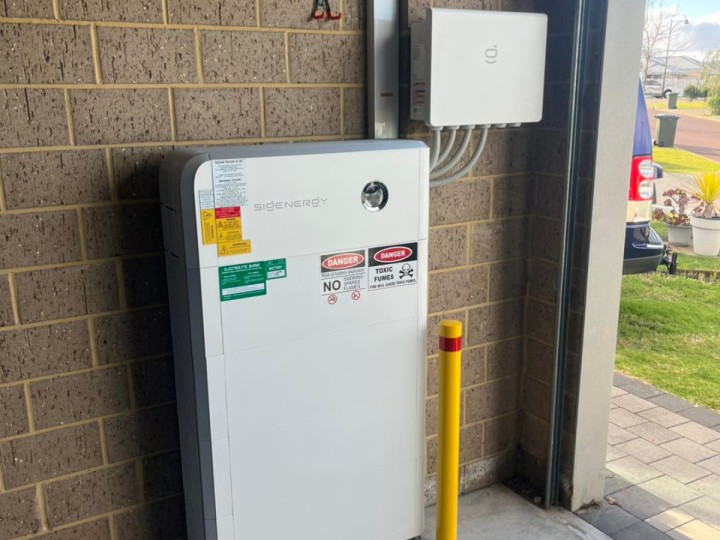
- Battery readiness: With the WA Residential Battery Scheme offering up to $5,000 in rebates for eligible Synergy customers, designing new builds to be battery-compatible adds genuine market appeal and resale value.
Working with a Qualified Solar Installer in Southwest WA
Installer selection matters more in WA than in most states, given the licensing requirements and regulatory obligations that come with every installation.
Installers must hold a current licence under the WA Electricity (Licensing) Regulations 1991 and carry Solar Accreditation Australia (SAA) accreditation to claim Small-scale Technology Certificates (STCs) on behalf of clients. Checking both credentials before appointing an installer isn’t just due diligence, it’s required for your client to access Commonwealth incentives.
Matt Gordon, Director of MaxSolar, is a licensed electrician with more than 15 years’ experience and over 250 solar installations completed across the Southwest WA region. Based in Vasse, MaxSolar services the corridor from Busselton to Margaret River, a service area they know well, having worked in it since 2012.
Every client receives three tailored system options, all Synergy and Western Power paperwork is handled by the MaxSolar team, and remote performance monitoring is set up as standard post-installation. The 10-year workmanship warranty covers every install. For developers and builders, that’s a single point of accountability, from specification to sign-off.
Here’s what some of their clients have to say:
“MaxSolar was the only company that provided us with options for our consideration and Matt thoroughly explained each option.” — Ben Murphy, Busselton
“Matt was so efficient, punctual, polite, professional & discussed every necessary decision with us.” — Greg & Lynne Mather, Busselton
“Unlike some other places we looked at for quotes, he was so quick to respond, kept up excellent communication, even post-installation.” — Emma Hardy
Common Mistakes to Avoid
- Underestimating seasonal shading: Trees that appear harmless in summer can significantly impact winter output when the sun tracks lower in the sky. Year-round shading analysis is essential, not optional.
- Ignoring coastal salt exposure: Within 5km of the coast, marine-grade hardware is a specification requirement. Standard residential spec won’t cut it.
- Treating solar as a finishing trade: Roof structure, cable runs, switchboard capacity, and grid connection applications all need to be considered during design, not at lock-up stage.
- Choosing the cheapest quote without verifying credentials: Under WA law, the installer must hold a licensed electrical contractor’s licence. Appointing an unqualified installer creates liability for everyone on the project, including the builder.
Incentives and Rebates Available in Southwest WA
Small-scale Technology Certificates (STCs)
A federal incentive that reduces the upfront cost of eligible solar systems. The STC value is calculated based on system size and location, and is typically applied as a point-of-sale discount by your SAA-accredited installer. Learn more at the Clean Energy Regulator.
DEBS (Distributed Energy Buyback Scheme)
WA’s solar export payment scheme. Synergy customers earn 10c/kWh for exports between 3pm–9pm and 2c/kWh at all other times (effective 1 July 2025). MaxSolar handles the DEBS application as part of the installation process.
WA Residential Battery Scheme
Up to $5,000 in rebates ($500 per kWh up to 10kWh) for eligible Synergy customers, limited to 20,000 homes. Batteries must be VPP-capable to qualify. Check your eligibility and get on the list with MaxSolar here.
Ready to Get Started?
Whether you’re advising on a new residential build, specifying solar for a commercial project, or helping a client upgrade an existing system, the right starting point is a proper site assessment, one that accounts for the site’s specific orientation, shading, switchboard configuration, and your client’s energy profile.
Contact the MaxSolar team to arrange a no-obligation consultation. We work directly with builders and developers across the Southwest WA region and can provide specification support, system options, and a fixed-price quote with no surprises on installation day.
Frequently Asked Questions
What is the best orientation for solar panels in Southwest WA?
North-facing panels at 30–35° tilt deliver the highest total annual energy output for most Southwest WA homes. However, east-west split configurations, or a west-facing bias, can be a better fit for households with afternoon and evening consumption patterns, or for clients who want to maximise export earnings during the DEBS peak window (3pm–9pm).
How does Southwest WA's climate affect solar panel performance?
Southwest WA’s Mediterranean climate provides excellent conditions year-round. Summer delivers strong irradiance with coastal breezes that moderate panel temperatures. Winter generation holds up well due to clear skies, typically reaching 70–80% of summer output, better than most eastern state comparisons.
Do I need special panels for coastal areas in Southwest WA?
Yes. Properties within 5km of the coast require marine-grade mounting systems and panels with enhanced frame protection against salt corrosion. This applies across Busselton, Dunsborough, Yallingup, Margaret River and surrounding coastal areas. Regular maintenance is also more important at these locations.
How much can shading affect solar output?
Shading during peak generation hours can reduce system output by 20–50% or more. Mature Southwest WA native trees and neighbouring buildings create complex shading patterns that shift seasonally. Professional shading analysis using solar pathfinder tools at design stage is the most reliable way to avoid this problem.
When is the best time to install solar panels in Southwest WA?
Installation can proceed year-round in Southwest WA. Autumn and winter installations have the advantage of positioning systems to capture peak summer generation from day one, and cooler working conditions make for more efficient installation days.
What size solar system do I need for a Southwest WA home?
Most Southwest WA homes suit systems between 3.9kW and 13.3kW depending on energy usage, roof space, and budget. The 6.6kW system is the most popular choice for average family homes. A proper site assessment considers usage patterns, roof orientation, export preferences, and any future additions like batteries or EV charging. Get a free quote from MaxSolar here.
How do I choose a qualified solar installer in Southwest WA?
Confirm that the installer holds a licensed electrical contractor’s licence under the WA Electricity (Licensing) Regulations 1991 and carries current SAA accreditation. Check for local experience, a 10-year workmanship warranty, and a clear process for handling Synergy DEBS applications and Western Power approvals on your behalf. Learn more about MaxSolar’s accreditations and approach here.
What maintenance do solar panels need in Southwest WA?
Southwest WA panels need minimal maintenance thanks to winter rainfall cleaning. An annual check, periodic cleaning during extended dry periods, and ongoing performance monitoring are generally sufficient. Coastal installations benefit from more frequent cleaning to remove salt deposits. MaxSolar offers a solar panel maintenance service across the Southwest region.
Can solar be installed on any roof type?
Most roof types, tile, metal, and Colorbond, support solar installation. Some older homes may need roof reinforcement or tile replacement before install. MaxSolar assesses roof type, cable runs, and switchboard suitability as part of every pre-installation quote to lock in a fixed price with no surprises.
What rebates and incentives are available in Southwest WA?
Southwest WA homeowners can access federal STCs (reducing upfront system costs), the DEBS export payment scheme (10c/kWh peak, 2c/kWh off-peak via Synergy), and the WA Residential Battery Scheme (up to $5,000 for eligible battery installations). MaxSolar manages the application process for all three as part of their end-to-end solar installation service.